As Covent Garden Dance Company celebrates its 20th anniversary and prepares for an exciting new chapter, we speak to its founder and director, Matt Brady, about the origins of the company, two decades of artistic endeavour, and why the most interesting adventures are often the ones you never quite planned.
What inspired you to set up Covent Garden Dance Company?
“Covent Garden Dance wasn’t born out of some grand, carefully considered plan. It evolved rather organically over a couple of years, beginning with an extraordinary performance by Rambert in Brighton.
Dance had fascinated me from a very early age, but the career paths I had been encouraged to pursue had taken me in quite different directions. It wasn’t until I happened upon that performance by Rambert that something was reignited. That evening rather lit the blue touch paper, awakening a fascination that had never really disappeared, merely lain dormant.
I came away completely captivated, with an almost insatiable appetite to explore the world of dance. I began attending everything I possibly could, immersing myself not only in performances but in the rich history of ballet, its great companies, choreographers and extraordinary artists.
Coming from a family steeped in literature and theatre, I suppose there was always a creative instinct waiting to find an outlet. Dance rather unexpectedly became it.”

“The real catalyst came over lunch with my mother, the novelist Charlotte Bingham. We were discussing our favourite short stories when I mentioned one that had always particularly resonated with me. She paused and said, “That would make a beautiful ballet.” And she was absolutely right.”
“Over the following six months, I set about assembling a creative team: a choreographer, a designer and, rather importantly, a producer who actually knew what they were doing. Before long, we had the beginnings of a production, a rather ambitious collection of people, and no company.
At the time, my office was in Covent Garden, overlooking the Piazza, above what is now the Apple Store. So the name was almost inevitable. Initially, I had intended to call it The Covent Garden Ballet Company, but the choreographer Christine Sundt wisely suggested dropping the word ballet. She felt it would unnecessarily define and restrict what we might eventually do. It was excellent advice. Dance is an infinitely broader and more interesting world.”

How did ballet feature in your childhood?
My earliest memory of dance is Gene Kelly. He remains, to this day, one of my absolute heroes. There was something about the extraordinary combination of musicality, athleticism, elegance and apparent effortlessness that I found utterly compelling.
I also had a rather unusual connection to the ballet world through my godmother, Violetta Elvin, one of the great ballerinas of The Royal Ballet’s formative years.
Violetta had been invited by Ninette de Valois to join the company, bringing with her the exceptional technical discipline of the Russian tradition. She belonged to a remarkable generation of dancers who helped shape what The Royal Ballet would become.
Looking back, perhaps the seeds were planted rather earlier than I realised. Although I certainly never imagined that I would eventually spend twenty years producing dance.”
What is ethos of Covent Garden Dance Company?
“At its heart, the philosophy is very simple: to bring exceptional dance and extraordinary artists out of the traditional theatre and into places where the setting becomes part of the experience.
I’ve never believed that great art should be confined to particular buildings, or indeed to particular audiences. There is something wonderfully liberating about experiencing dance in an unexpected environment. It changes the relationship between the performer and the audience. The formality disappears, the atmosphere becomes more intimate, and people often discover an emotional connection to the work that they might not have anticipated.
Of course, artistic excellence must always remain paramount. But I think the surroundings, the hospitality, the sense of occasion and the pleasure of sharing an evening with others can all contribute to something greater than the performance alone.
Ultimately, we want people to leave feeling that they have experienced something genuinely special, whether they have spent a lifetime watching ballet or are seeing it for the very first time.”
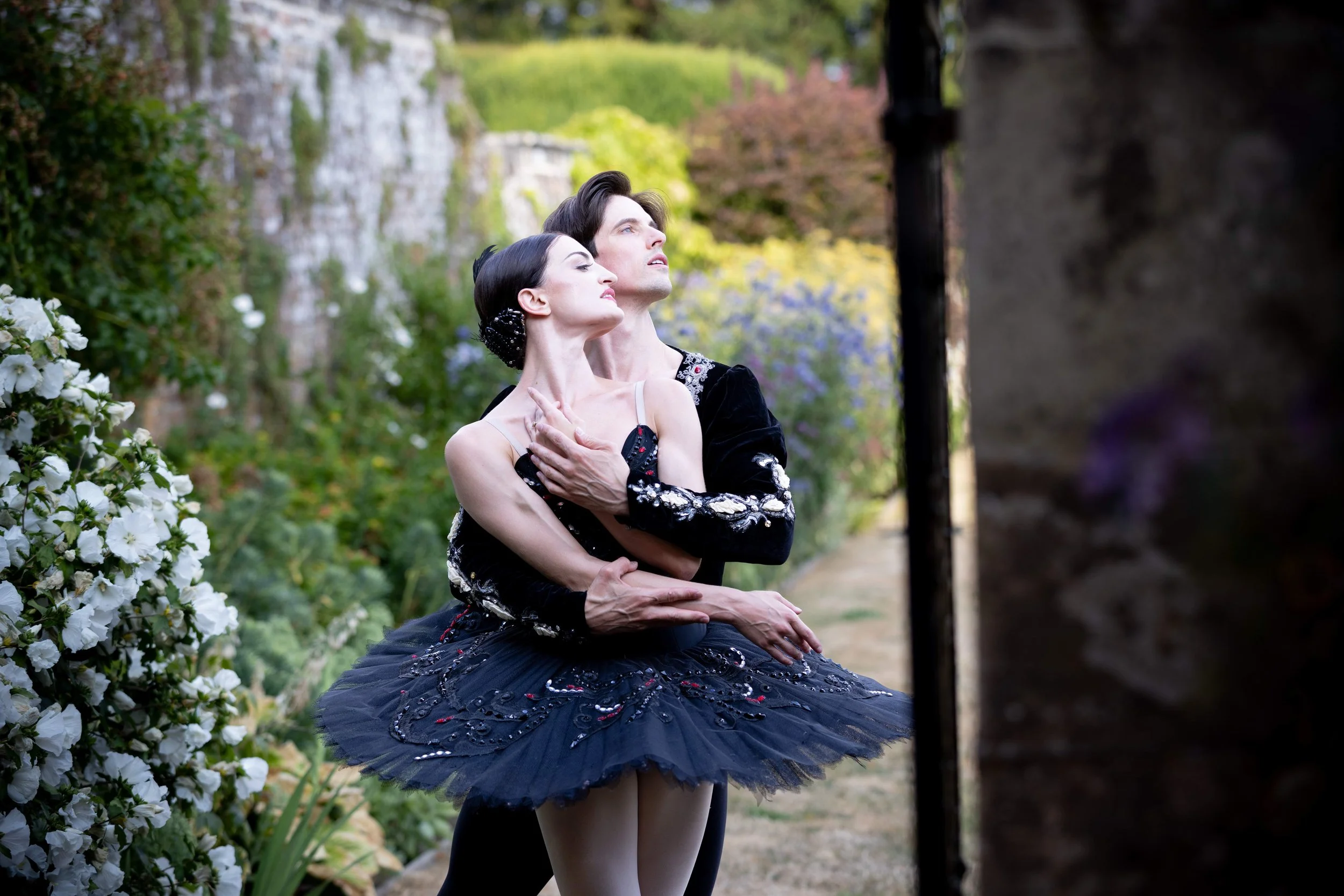
Joy Womack & Xander Parish, Hatch House
Photo credit: Alice Pennefather
How has CGDC grown over the years?
“Like most creative ventures, it began with ambitions that were entirely disproportionate to the available resources. My original intention was to produce full-length ballets. Reality, however, has a rather effective way of moderating one’s grander aspirations.
Our first production was an intimate performance for just 78 guests at The Chapel in Bruton, Somerset, with two wonderful Royal Ballet dancers, Laura Morera and Ricardo Cervera.
It was late May. The afternoon sunlight streamed through the chapel windows, the audience surrounded the dancers, and at the end people threw flowers down from the gallery above. It was completely magical.
Twenty years on, and despite everything we have subsequently produced, it remains one of my favourite performances. What followed was a gradual evolution, from small, intimate productions to increasingly ambitious programmes involving some of the world’s finest dancers, musicians and choreographers.”

Lauren Cuthbertson & Xander Parish, Dubai.
“By 2019, things had developed considerably. We had presented performances in Dubai at a property belonging to His Highness Sheikh Mohammed in Jumeirah, celebrated ten years at Hatch House with three sold-out evenings, and were developing an exciting new project in the Bahamas with a major international partner. And then, of course, Covid arrived.”
Almost overnight, everything stopped. Projects that had taken years to develop simply evaporated. It was an extraordinary reminder of how vulnerable the performing arts can be, and how much depends upon circumstances entirely beyond one’s control.
But it also reinforced something I have come to believe rather strongly: that the creative impulse doesn’t disappear simply because circumstances make its expression difficult.
You adapt, you persevere, and eventually you begin again.”
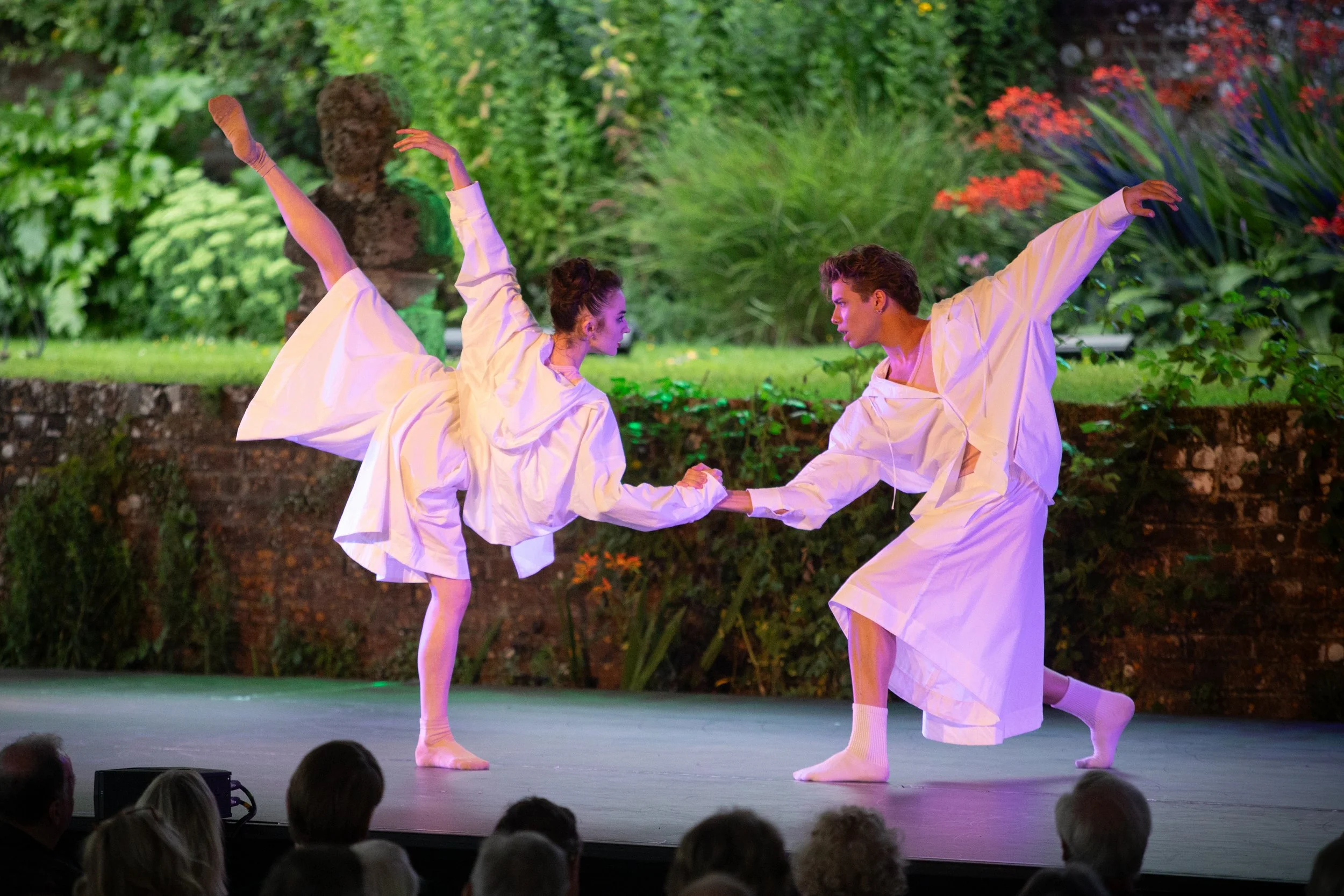
Viola Pantuso and Marco Masciari, Royal Ballet Company - Hatch House
Photo credit: Alice Pennefather
How did you discover Hatch House, and what made it so special?
“Rather improbably, through a fancy-dress party. A friend and I had gone to a garden opening at Hatch House while looking for a costume for a party at Stourhead. As we walked into the gardens, he turned to me and said, “This would be perfect for one of your shows.” He was absolutely right. There was something immediately theatrical about the place. The architecture, the gardens, the intimacy of the setting and that wonderful sense of being somewhere slightly removed from the everyday world.
What began as an idea became a seventeen-year relationship and, in many ways, the artistic home of Covent Garden Dance. Over those years we welcomed some of the most remarkable dancers in the world, alongside exceptional musicians, choreographers and creative collaborators. We presented premieres, revived works that deserved to be seen again, and gave emerging artists opportunities to create and perform alongside established international stars.
I think one of our greatest achievements was creating an environment in which extraordinary artists genuinely wanted to participate. There was a spirit of collaboration, generosity and adventure that became part of Hatch House’s identity, and the audience became an equally important part of that story. Many returned year after year, developing friendships with one another and with the company. It became far more than an annual performance.
Every summer we tried to do something we hadn’t attempted before. Not simply to make things bigger, but to make them better, more interesting, and occasionally a little more daring.
Seventeen years is a considerable chapter in anyone’s life, and I shall always be immensely proud of what we created there.”
Why the move to Charlotte’s Lake?
“I think there comes a moment when you recognise that something has reached its natural conclusion, and that the right thing to do is to celebrate it rather than allow it to become repetitive. Our final season at Hatch House in 2026, coinciding with Covent Garden Dance’s twentieth anniversary, felt like precisely that moment. We had an exceptional programme of international artists and new works, and it seemed an entirely fitting way to bring seventeen wonderful years to a close.
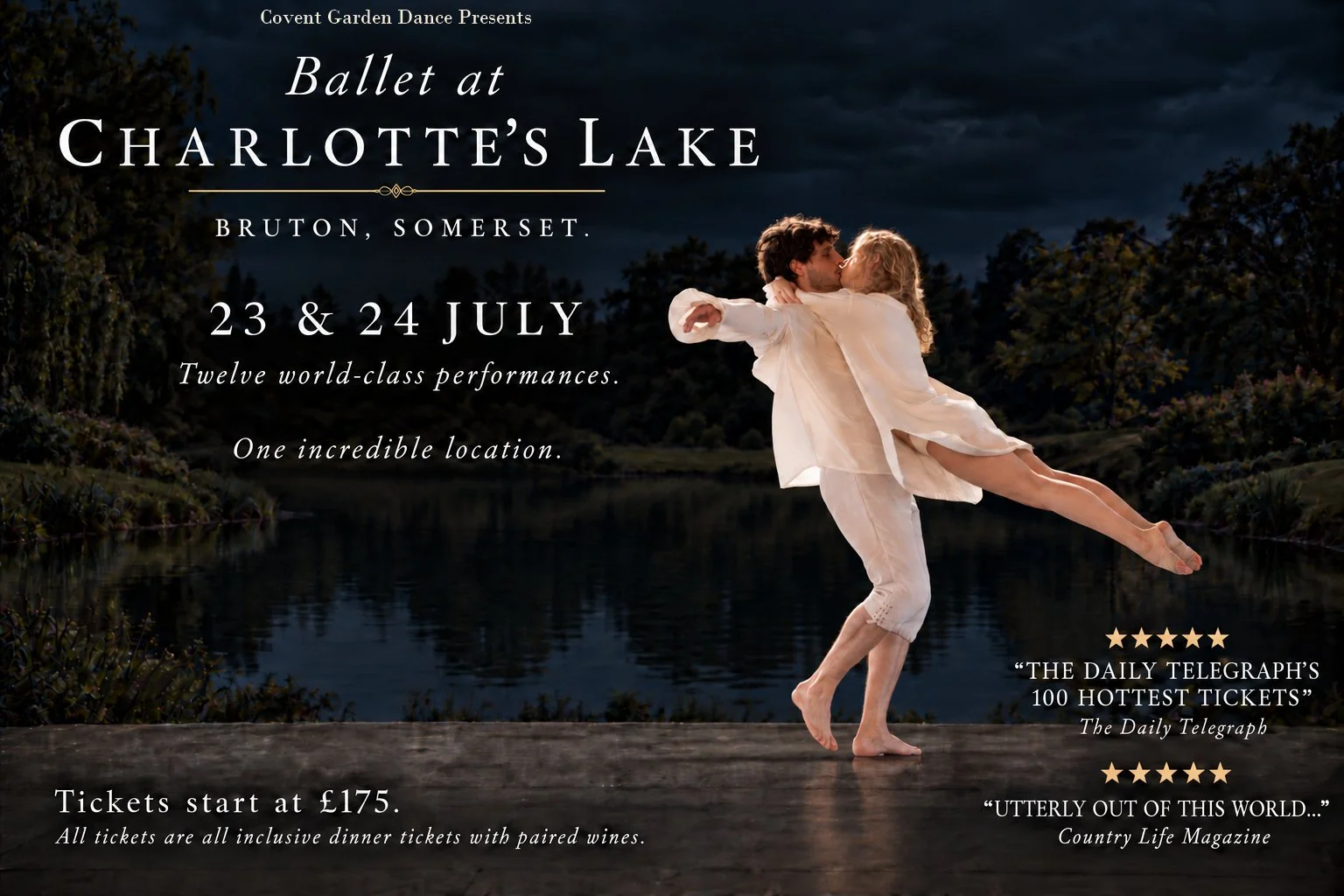
But endings are often simply beginnings in disguise. Charlotte’s Lake represents an opportunity to take everything we have learnt and imagine something entirely new. Set in the countryside just outside Bruton, it is a remarkable natural amphitheatre, with an island stage surrounded by water. The landscape, the changing light, the reflections and the extraordinary intimacy of the setting will all become part of the theatrical experience.
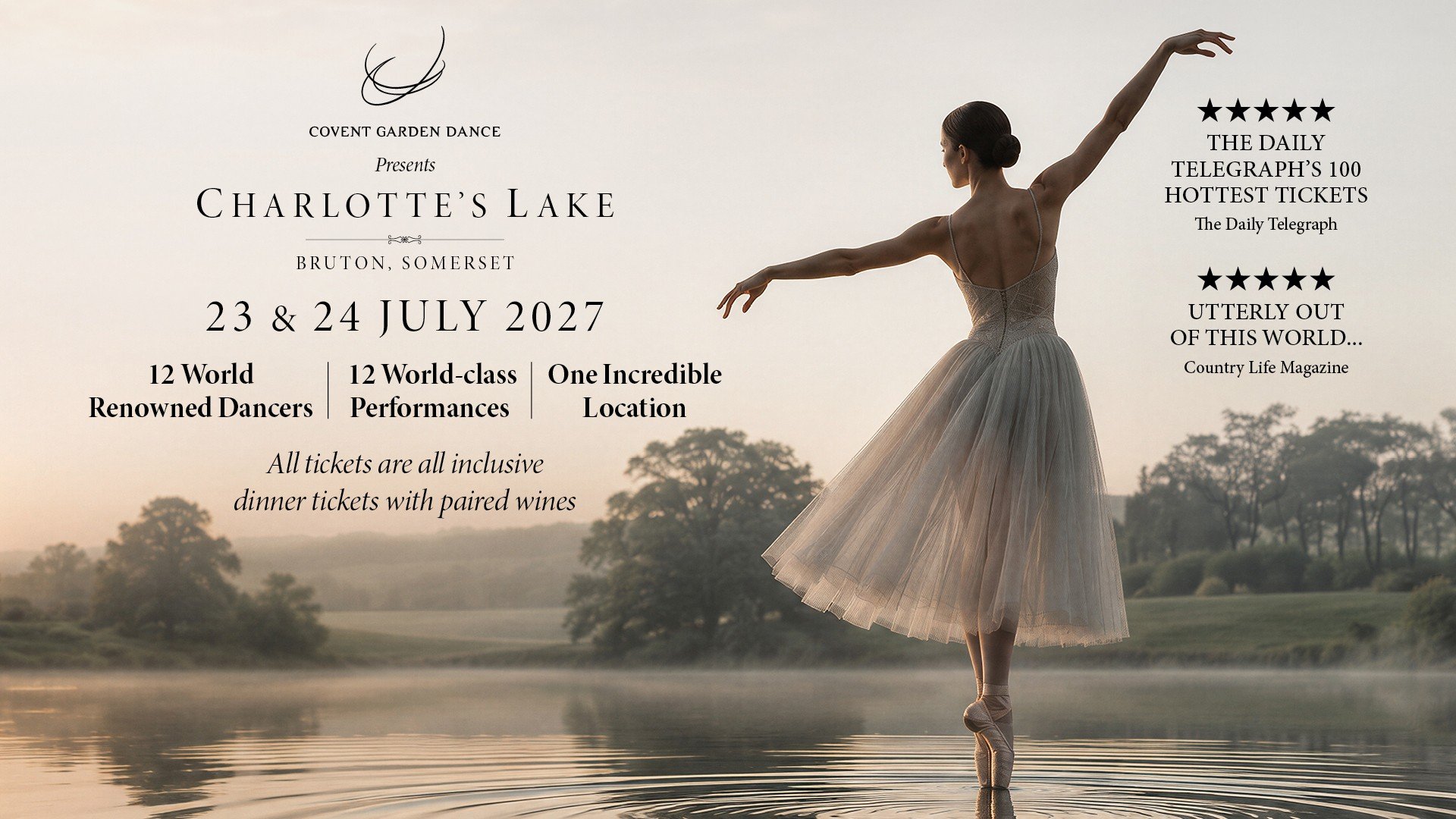
What excites me most is the opportunity to create a venue conceived specifically for what we do, rather than adapting an existing space. It allows us to think differently about the relationship between performance, landscape and audience, and to explore ideas that would have been impossible elsewhere. But I don’t want simply to recreate Hatch House beside a lake. That would rather miss the point.
A new setting should inspire new thinking, new artistic possibilities and, eventually, traditions of its own. What will remain unchanged is the philosophy that has guided us from the beginning: exceptional artists, ambitious programming, generous hospitality and the belief that an evening of dance can be something truly memorable. I find the prospect enormously exciting.”

What can audiences expect from this year’s performances?
“Magic.”
What relationship does the Dicky Buckle Charitable Fund have to Covent Garden Dance Company?
“The two organisations are entirely independent, but their objectives are naturally complementary. The Dicky Buckle Charitable Fund exists to support young and emerging choreographers and creative artists, particularly in the development of new and original work. That is something I feel very strongly about. The performing arts cannot survive on the interpretation of established repertoire alone. They depend upon new ideas, new voices and, importantly, opportunities for artists to experiment, take risks and occasionally fail.
Creating original work is both difficult and expensive, and opportunities for emerging choreographers to develop their ideas in a professional environment are far too limited. Wherever possible, Covent Garden Dance supports the Fund’s objectives by providing a platform for new work and introducing emerging talent to our audiences. It’s a mutually beneficial relationship, but the distinction between the charity and the production company is important. Ultimately, both share a conviction that the future of dance depends upon nurturing the creative talent of the next generation.”
What is next for Covent Garden Dance Company?
“Charlotte’s Lake in July 2027 is very much our immediate focus, and I think it has the potential to become something quite extraordinary. Twenty years is an interesting milestone. Long enough to have learnt a few lessons, made a reasonable number of mistakes, and perhaps developed a clearer understanding of what really matters.
But I don’t feel any less ambitious than I did when I started. If anything, the ambitions have become more considered, although certainly no less adventurous. I remain as fascinated by dance and its possibilities as I was after that first performance in Brighton.
There are still so many artists I would love to work with, so many ideas worth exploring, and so many extraordinary places in which dance might find a new audience. But one thing twenty years has taught me is not to get too far ahead of myself. In this business, you’re only ever as good as your last production. And the show isn’t over until it’s over.”